

ABOUT THE MODALISBOA ASSOCIATION
The ModaLisboa Association is a non-profit organisation working to strengthen and promote Portuguese Fashion.
It understands Fashion as a creative discipline rooted in authorship and design, connecting culture, the economy, industry and society. Through its multidisciplinary projects, ModaLisboa brings together those who create, produce and share knowledge, helping to build a more sustainable, agile and diverse Fashion ecosystem. Its work spans project management, curatorial practice, consultancy and production, developing original programmes in collaboration with a wide network of partners, including the Municipality of Lisbon, the Lisbon Tourism Association, APICCAPS, CENIT/ANIVEC and CITEVE.
ModaLisboa also plays an active role in international networks and organisations such as the European Fashion Alliance (EFA) and FashionKIC, strengthening the voice of Portuguese Fashion in the debates, policies and initiatives shaping the future of Fashion across Europe.
MISSION
To empower talent, strengthen the Portuguese Fashion ecosystem and champion independent Fashion that is relevant and ready for the future.
VALUES
CREATIVITY
We recognise creativity as a driving force for innovation, critical thinking and cultural transformation.
RESPONSIBILITY
We promote conscious and sustainable practices that consider the social, environmental and economic impact of our work.
INCLUSION
We advocate for a Fashion industry that is more diverse, accessible and representative of the people, experiences and perspectives that shape society.
TRANSPARENCY
We value the exchange of knowledge, clarity of process and relationships built on trust.
COLLABORATION
We believe in the power of collaboration, bringing together different disciplines, generations and production contexts.
FUTURE
We support talent development, experimentation and the ability to anticipate the challenges and opportunities shaping the future of Fashion.
GOVERNANCE
The ModaLisboa Association is a non-profit organisation made up of individuals and organisations united by a shared purpose: to develop activities, projects and initiatives that serve the public interest. Its work is rooted in collaboration between members, active community participation and the creation of social, artistic, cultural, educational and professional value. Rather than distributing profits, the Association reinvests its resources in advancing its mission and fulfilling its objectives.
ABOUT LISBOA FASHION WEEK
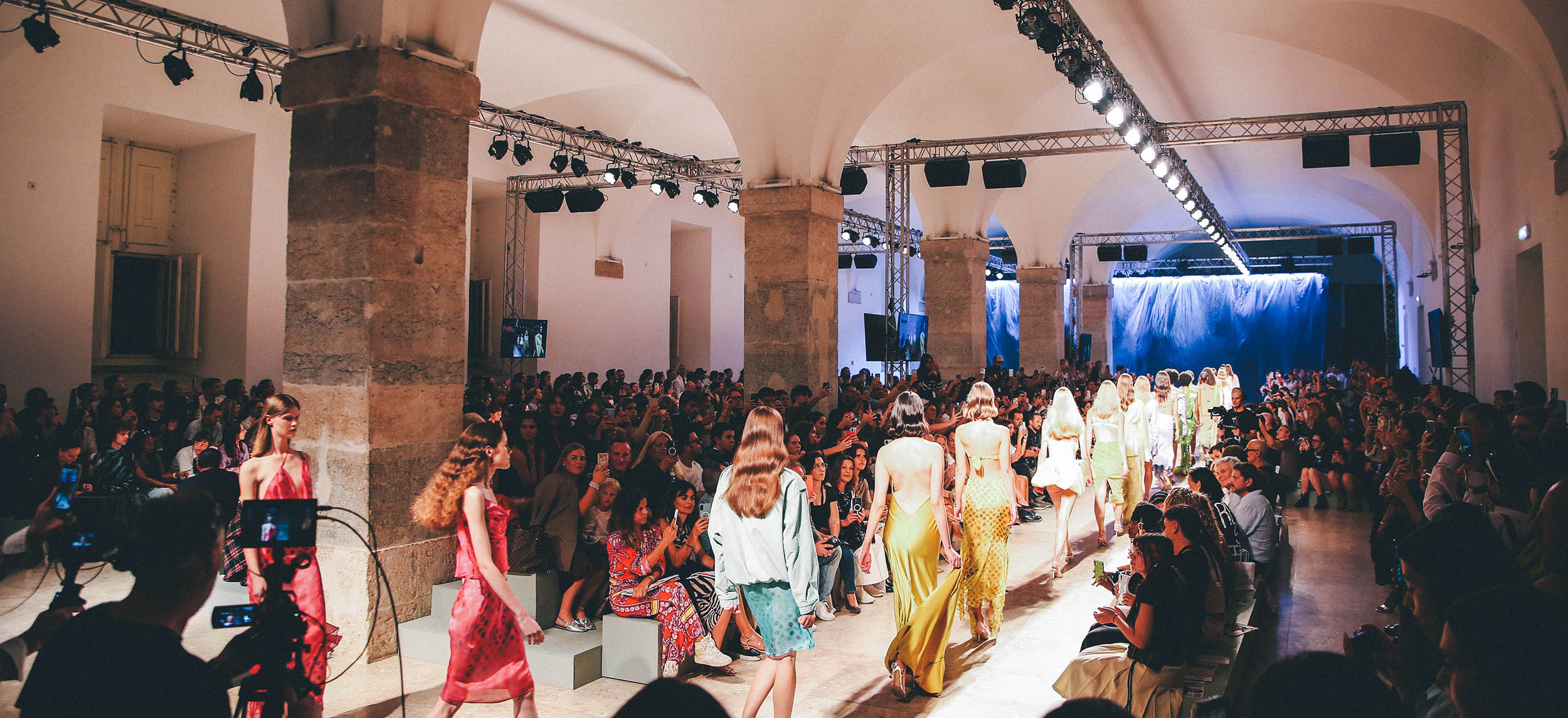
Lisboa Fashion Week is the leading platform for Portuguese Fashion and the flagship project of the ModaLisboa Association.
Held twice a year since 1991 and co-organised with the Municipality of Lisbon, it creates a dialogue between different spaces and communities across the city, establishing Lisbon as a place of experimentation, reflection and discovery.
Each edition responds to the transformations shaping contemporary Fashion and its relationship with culture, technology, production and society. Fashion Shows, exhibitions, conferences, workshops and presentations bring Designers, industry, institutions, specialists, schools, the media and the public together, encouraging the exchange of knowledge while creating new connections, collaborations and business opportunities.
Fashion Designers are at the heart of Lisboa Fashion Week as authors and agents of cultural and intellectual change. Their research, commitment to excellence and responsible practices evolve in close dialogue with craftsmanship and technological innovation, reinforcing the interdependencies that are essential to the industry’s development. Through platforms such as SANGUE NOVO and WORKSTATION, Lisboa Fashion Week supports the visibility, professional development and integration of new generations of Designers, contributing to the continuous renewal of Portuguese Fashion.
Documentary ModaLisboa 50
HISTORY
1991–1993 | THE BEGINNING
ModaLisboa was founded in April 1991 by Eduarda Abbondanza and Mário Matos Ribeiro, in co-organisation with the Municipality of Lisbon. Recognised as one of the world’s first independent Fashion Weeks, it brought together at Teatro Municipal São Luiz the Designers leading the culture of independent Fashion that had emerged from Manobras de Maio and the creative scene of Bairro Alto. Choreographed by Paulo Gomes, the first edition featured Abbondanza / Matos Ribeiro, Ana Salazar, José António Tenente, Júlio Torcato, Lena Aires, Luís Barbeiro, Luís Buchinho, Manuel Alves/José Manuel Gonçalves, Manuela Gonçalves, Nuno Eusébio and Nuno Gama.
Its creation marked a turning point for Portuguese Fashion. At a time when the industry was still fragmented and lacked representative structures, ModaLisboa brought Designers, producers, communications professionals and cultural institutions together on a shared platform, giving independent Fashion greater visibility, structure and professional recognition. A regular calendar of presentations was established for April and November, taking ModaLisboa to cultural venues across the city, including Cinema Tivoli and the Museu da Marinha.
From the outset, scenography and temporary architecture became integral to the ModaLisboa experience, shaping the identity of each edition while responding to the character of every new venue. Manuel Reis created the first of these interventions, followed over the years by José Adrião, Miguel Vieira Baptista, P-06, MOOD and, more recently, Nuno Castro Paiva.
SANGUE NOVO was launched in 1992, with Maria Gambina becoming its first winner, reaffirming ModaLisboa’s commitment to discovering and nurturing emerging talent from the very beginning. These early years also saw the emergence of a distinctive visual identity through collaborations with Ricardo Mealha Atelier and campaigns by photographers including Pedro Cláudio and Carlos Ramos. The participation of French Designer Xuly Bët reflected an openness to international perspectives that would become a defining feature of the project.
1996–1999 | EXPANSION AND CONSOLIDATION
After a three-year hiatus, ModaLisboa returned in December 1996 with the founding of the ModaLisboa Association. The new structure gave the project greater stability while supporting the growing professionalisation of Portuguese Fashion at a time when the industry was gaining scale, visibility and public recognition.
During these years, Lisboa Fashion Week broadened its scope. Fashion Shows were joined by exhibitions, platforms for emerging talent and new programme formats that reflected a broader understanding of Fashion. The comeback edition, held at Cordoaria Nacional, brought together Designers, photographers, artists and creatives from different disciplines in a large-scale group exhibition, signalling an increasingly close relationship between Fashion and contemporary culture.
This period also saw the emergence of a new generation of Designers, including Dino Alves, Fátima Lopes, Katty Xiomara, Miguel Vieira, Miguel Flor and Osvaldo Martins. SANGUE NOVO continued to establish itself as a platform for discovering new talent and, in 1999, NOVA VAGA was launched to give emerging Designers their first opportunity to present their work to the public.
As ModaLisboa continued to grow, it expanded into new venues across the city, including Cordoaria Nacional, Gare Marítima de Alcântara, Armazéns Abel Pereira da Fonseca, Museu da Cidade and the newly opened Pavilhão de Portugal, bringing Fashion into new architectural and heritage settings.
1999–2003 | A LANGUAGE OF ITS OWN
From October 1999 onwards, every edition of ModaLisboa was built around a central theme. At a time when Fashion Weeks around the world focused almost exclusively on collections, this approach was unprecedented. It established a point of view, a way of interpreting the present and imagining the future that continues to define ModaLisboa today. Each campaign and visual identity followed the same principle, drawing on the many voices, perspectives and talents that shape Portuguese Fashion. Beyond the names already mentioned, ModaLisboa’s multimedia archive includes work by design studios, agencies, creative directors, photographers, videographers and visual artists such as Flúor Design, Washing Machine, Inês Gonçalves, João Silveira Ramos, Augusto Brázio, Marcin Tyszka, Ogilvy, P-06 Atelier, Rui Palma, Ricardo Santos, Joana Areal, Graficalismo, Rui Aguiar, Pedro Ferreira and Havas Lisboa.
At the turn of the century, ModaLisboa followed Lisbon’s expansion into new parts of the city, occupying venues shaped by urban renewal, contemporary architecture and industrial heritage, including Museu da Cidade, Torre Vasco da Gama, Estação do Oriente, Cordoaria Nacional, Armazém Terlis and Convento do Beato.
The ModaLisboa Association also began to expand its activity beyond Lisboa Fashion Week. The ModaLisboa Awards were established in 1999, introducing new forms of recognition for Portuguese Fashion. In 2001, as Lisboa Fashion Week celebrated its tenth anniversary, ModaLisboa Design opened its doors. Dedicated to Portuguese creativity, the store remained active until 2004 and became one of the country’s leading spaces for promoting and selling Portuguese design. The following year, the Association presented +PORTUGAL in Barcelona, a multidisciplinary project bringing together Fashion, Design, art, photography, video, craft and Portuguese production to present a contemporary vision of Portugal to international audiences.
Talent development also entered a new phase. SANGUE NOVO introduced Designers including Carlos Raimundo, Joana Jorge, João Branco and Luís Sanchez, Marco Mesquita, Sara Lamúrias, Priscila Alexandre, Ricardo Dourado, Filipa Homem and Lara Torres. At the same time, LAB became a space for experimentation for authors such as Alexandra Moura, Aleksandar Protic and Lidija Kolovrat, helping establish a generation of Designers who would go on to shape Portuguese Fashion over the decades that followed.
2004–2007 | MOMENTUM
In the years leading up to the 2008 financial crisis, economic growth, the consolidation of major luxury groups and Fashion’s growing media presence created a climate of confidence that proved particularly favourable to the industry’s expansion.
The Lisboa Fashion Week calendar reached an unprecedented scale, offering a broader representation of the Portuguese Fashion landscape. Guest Designers including Felipe Oliveira Baptista, Gloria Coelho, Reinaldo Lourenço, Sonia Rykiel, Dawid Woliński, Delphine Murat and Max Chernitsov strengthened its international outlook, while brands such as Lion of Porches, Cheyenne, Lanidor, Globe Line, Lois and North East Polar reflected the increasingly close relationship between creativity, industry and the market.
During this period, ModaLisboa redefined its approach to emerging talent. As competitions for young Designers multiplied across Portugal, SANGUE NOVO was temporarily suspended, allowing the Association to focus its efforts on LAB. Created in 2004, the platform quickly established itself as a space for experimentation and professional development, welcoming Designers such as Pedro Waterland, Priscila Alexandre, Ricardo Dourado, Storytailors, Ricardo Preto, Lara Torres and Aforest-design into the official calendar.
From Armazém Terlis to Armazém 23, in Cais da Matinha, and from Museu da Electricidade to Museu Nacional de História Natural, ModaLisboa occupied some of Lisbon’s most distinctive venues.
Its visual identity evolved as well. FIVE STARS introduced the first written manifesto, while FAST-FORWARD marked the arrival of video, opening the way for a multidisciplinary visual identity combining text, photography, graphic design and moving image.
2007–2009 | NEW HORIZONS
For the first time, Lisboa Fashion Week took place outside Lisbon. The move was accompanied by an unprecedented communication campaign: Cais do Sodré became the starting point for the edition, while trains on the Cascais Line were wrapped in the MOVE campaign, turning the journey between the two cities into an extension of the ModaLisboa experience.
The move confirmed the strength of the community that had grown around ModaLisboa. Between the Cidadela de Cascais and Casino Estoril, Designers, partners, the press and the public followed the event, while the calendar welcomed names such as Pedro Pedro, White Tent, Vítor and Guest Designer Isabela Capeto, alongside LAB Designers including Ricardo Preto, Ricardo Dourado and Lara Torres. Brands such as Adidas, Cia. Marítima, Hello Kitty, Lion of Porches and Custo Barcelona also contributed to an increasingly diverse programme.
2010–2012 | COMING HOME
In 2010, ModaLisboa returned to its home city. For the first time, Lisboa Fashion Week took over Pátio da Galé, a venue that would become the event’s main stage over the following decade. The next edition, MODALISBOA IN THE MARKET, unfolded entirely within the bustling Mercado da Ribeira, becoming one of the most unexpected interventions in the event’s history. From 2011 onwards, the main programme returned to Pátio da Galé, while MUDE, Paços do Concelho and the BPI headquarters expanded the dialogue between ModaLisboa, architecture and the city’s built heritage.
As the calendar underwent a profound generational renewal, LAB established itself as the launchpad for Designers including Marques’Almeida, Saymyname, Ricardo Andrez, Daniel Dinis, Luís Carvalho and Os Burgueses, whose careers quickly came to intersect with those of Pedro Pedro, Valentim Quaresma, Aleksandar Protic, Alexandra Moura, Dino Alves, Filipe Faísca and Luís Buchinho. During this period, sustainability also evolved from an occasional theme into a guiding principle, gradually becoming embedded in the Association’s thinking and shaping the development of its projects and initiatives.
The Estoril Fashion Art Festival symbolically brought to a close the chapter that had begun in 2007. Across ten venues in Estoril and Cascais, it brought together more than twenty events spanning exhibitions, Fashion Shows, installations, cinema, photography, video art, public art, food design and debates. With Spain as the guest country, the programme featured figures including Amaya Arzuaga, Paco Rabanne and Luis Venegas, further reinforcing the Association’s artistic and multidisciplinary approach.
In 2011, Lisboa Fashion Week marked its twentieth anniversary with a critical reading of the Association’s archive. Presented as part of the sixth edition of Experimenta Design, RETRO / FUTURE was curated by Eduarda Abbondanza and Francisco Rocha, bringing together two decades of posters, invitations and other communication materials at the former Boa Hora Courthouse. The exhibition traced the parallel evolution of Fashion, graphic design and ModaLisboa’s visual identity.
2013–2016 | BUILDING AN ECOSYSTEM
With Pátio da Galé firmly established as the centre of Lisboa Fashion Week, ModaLisboa significantly expanded its programme. In 2013, Fast Talks created a permanent space for debate on the Fashion industry; Wonder Room brought audiences closer to Portuguese brands through a pop-up store dedicated to national design; and Close-Up ModaLisboa introduced a regular programme of documentary screenings exploring Fashion culture. The following year, Workstation PHOTO extended this ecosystem to photography with a platform and exhibition dedicated to emerging talent.
SANGUE NOVO returned in 2013, reviving one of ModaLisboa’s founding platforms for discovering new Designers. In the editions that followed, it introduced talents including HIBU, Olga Noronha, Inês Duvale, David Catalán, Duarte and João Barriga, while LAB continued to launch Designers such as Awaytomars, David Ferreira and Morecco into the main calendar, ensuring the continuous renewal of Portuguese Fashion.
2017–2020 | COLLABORATION IN PRACTICE
Lisboa Fashion Week once again embraced an itinerant format. The Centro Cultural de Belém, Pavilhão Carlos Lopes and the Oficinas Gerais de Fardamento e Equipamento do Exército hosted successive editions of the event, each new venue offering a different perspective on Fashion while opening spaces that were rarely accessible or not usually part of the city’s cultural programme.
Collaboration became a defining principle of the Association’s work. In 2017 and 2019, the MODAPORTUGAL Showcase brought a selection of Portuguese creativity to Paris through a project promoted by CENIT in partnership with ANIVEC/APIV, APICCAPS, AORP and ModaLisboa. That same year, MODAPORTUGAL LINKS launched a programme connecting emerging European Designers, higher education institutions, technological centres and the Portuguese industry, encouraging knowledge exchange and direct engagement with the country’s manufacturing expertise. Also in 2017, UNITED FASHION brought together seven European Fashion organisations to support the internationalisation, professional development and business growth of independent Designers, making ModaLisboa part of one of the sector’s most significant European collaborations.
At ModaLisboa BOUNDLESS, sustainability found a practical and participatory expression through Global Fashion Exchange, an internationally recognised platform dedicated to the circular economy. A clothing swap, workshops, artistic installations and public activities encouraged reuse, waste reduction and more responsible forms of consumption.
In 2018, Lisboa Fashion Week’s 50th edition was marked by the release of the documentary ModaLisboa 50, directed by Márcio Simões and produced by Kinema for RTP2. Drawing on extensive research and the testimonies of those who have shaped the Association’s history since 1991, the film brought together different generations, perspectives and memories, preserving a shared legacy of Portuguese contemporary culture.
2020–2022 | A SYSTEM IN ADAPTATION
The pandemic caused an unprecedented disruption in the Fashion industry. Production chains were interrupted, international calendars suspended and the model of Fashion Weeks was questioned. ModaLisboa Association profoundly reorganised its activities, preserving the continuity of Lisboa Fashion Week and its support for Portuguese Designers. Presenting collections corresponding to a specific season was no longer mandatory — a decision that remains in effect today and has given Designers the freedom to define their own working rhythms.
Held entirely outdoors, at Parque Eduardo VII, MODALISBOA MAIS reduced its physical presence by approximately 80% and intensified its digital presence. Interviews, conversations, hosts, new audiovisual formats and unprecedented online coverage became part of the Lisboa Fashion Week experience. Months later, MODALISBOA COMUNIDADE took place in a digital format: at Pátio da Galé, fashion films were produced for each Designer, complemented by exclusive interviews and conversations with industry experts about ways of resisting and adapting the Fashion system. Even the traditional closing party found a symbolic expression through a DJ set by Yen Sung broadcast online.
Between Capitólio and Estufa Fria, AND NOW WHAT? marked the gradual return to a physical format, with a strict limitation on audience numbers and outdoor conversations dedicated to the future of Fashion. In 2022, MODALISBOA METAPHYSICAL occupied Factory Lisbon and Hub Criativo do Beato, bringing this cycle to a close and opening a new chapter for the Association.
Despite the exceptional circumstances, ModaLisboa remained committed to talent development. Constança Entrudo, João Magalhães and Béhen consolidated their careers, while the emerging design platforms introduced names such as Filipe Augusto, Carolina Raquel and António Castro.
2022–PRESENT | CONVERGENCE
Following the pandemic, the ModaLisboa Association redefined its role, taking an increasingly strategic position in the transformation of the Fashion industry. Its year-round work became organised around the issues shaping the sector’s future, including emerging design, brand building, craftsmanship, sustainability, technological innovation and education. This evolution was accompanied by stronger collaborative networks, bringing together companies, industry associations, cultural institutions, technological centres, educational establishments and international partners to develop shared responses to the challenges of contemporary Fashion.
The OASIS, CORE, À LA CARTE, FOR GOOD, SINGULAR, CAPITAL, BASE and PEBBLING editions reflected this transformation. Lisboa Fashion Week continued to grow through an increasingly integrated programme across different venues in the city. Alongside Lisboa Social Mitra and the return to Pátio da Galé, MUDE, CAM, public space and new programme formats deepened the dialogue between Fashion, culture, architecture and citizenship, bringing creative practice closer to different communities and audiences.
During this period, WORKSTATION NEW MEDIA, supported by the Portuguese Directorate-General for the Arts, opened up new possibilities for virtual and augmented reality, artificial intelligence and digital practices. Developed in partnership with the PVH Foundation, amanhã created new opportunities for young people from different social and economic backgrounds to access education and careers in the Fashion industry, promoting greater diversity in professional pathways. In collaboration with CITEVE and BCSD Portugal, beat by be@t brought Designers and textile companies together to develop collaborative approaches to sustainability and circularity.
FASHION HOUSE brought together Fashion presentations, exhibitions, technology, craftsmanship, launches, networking and a programme designed for different communities. Developed in partnership with APICCAPS and CTCP, TWO STEPS FROM THE FUTURE brought audiences closer to the research, material innovation and technological development transforming the Portuguese footwear industry.
The Association’s work also gained a new European dimension. As a founding member of the European Fashion Alliance, ModaLisboa helps shape strategies and policies for a Fashion industry that is more sustainable, innovative and socially responsible. Its participation in FashionKIC further strengthens this commitment, connecting design, research, education, technology and manufacturing through international networks of knowledge.
Thirty-five years after its foundation, ModaLisboa continues to build the future on the foundations that have always defined its history: the ability to bring together different people, forms of knowledge and practices to transform the conditions in which Fashion is created, understood and shared.
TEAM
Eduarda Abbondanza | President & Creative Director
Joana Jorge | Project Director
Pedro Carvalho | CFO
Célia Félix | Partnerships & Sponsorship Director
Irina Chitas | Editorial & Content Coordinator
Manuela Oliveira | Communications & Press Coordinator
Lígia Gonçalves | International Press Officer
Cláudia Nunes | Website & Sangue Novo Coordinator
Gonçalo Santos | Social Media Manager
Fátima Barros | Administrative Manager
Luís Pereira | Shows, Casting & Backstage Coordinator
Inês Guimarães | Production Director
Graziela Sousa | Special Projects Coordinator
